
Today is World Ocean Day, a day that unites millions across the globe to protect our blue planet. While every day should be Ocean Day, this one reminds us just how vital the 71% of our world covered by water truly is: for our health, our climate, and our future.
First proposed by Canada at the 1992 Earth Summit in Rio, it supports the UN Sustainable Development Goal 14: Life Below Water. This year’s theme focuses on strengthening marine protected areas. Overfishing, pollution, and rising sea temperatures continue to put our oceans under immense pressure. Yet, they give us so much in return – oxygen (mangroves, kelp forests, seagrasses, etc.), food, livelihoods, climate regulation, spiritual connection, and pure joy!
Our oceans absorb up to 30% of carbon dioxide emissions and more than 90% of the heat produced by greenhouse gases. They are the largest carbon sink on the planet and a source of life that connects us all.
But they’re under threat:
• Microplastics are found in fish and fish-eating birds
• Ocean acidification harms coral reefs and shell-forming species (turtles)
• Overfishing and illegal practices collapse marine populations
• Agricultural runoff creates 'dead zones' devoid of oxygen
• Noise pollution disrupts whale migration, and light pollution disrupts turtles
• Habitat loss increases coastal vulnerability to storms and rising seas
To meet the targets of SDG 14, we must:
• Cut marine waste and habitat destruction
• Eliminate harmful fishing subsidies
• Support sustainable aquaculture
• Advance ocean science and technology
• Expand marine protected areas (currently only around 8% of the ocean)
Since my student days in Falmouth, Cornwall, I’ve felt deeply connected to the sea. I remember sitting by a crumbling window at Pendennis Castle high above the town, gazing out over the water and thinking about the world beyond.
Exploring Spain, Tunisia, Greece and beyond, I’ve been lucky to see dolphins, turtles, and vibrant marine life in their natural homes. I’ve admired the work of Wildlife Sense as they mark nesting sites and study returning turtles. I’ve chosen not to use speedboats or take part in water sports activities that could harm sealife, discouraged the taking of shells from beaches: take nothing but pictures, leave nothing but footprints, and kill nothing but time. I’ve loved hearing how charities and businesses collaborate to reuse ghost fishing nets, turning them into flooring through initiatives like Interface.
The real treasure isn’t buried in a chest on the seabed. It’s the ocean itself and the life it sustains. Let’s protect our blue planet while we still can.
💙 What small action will you take today to help protect our oceans?
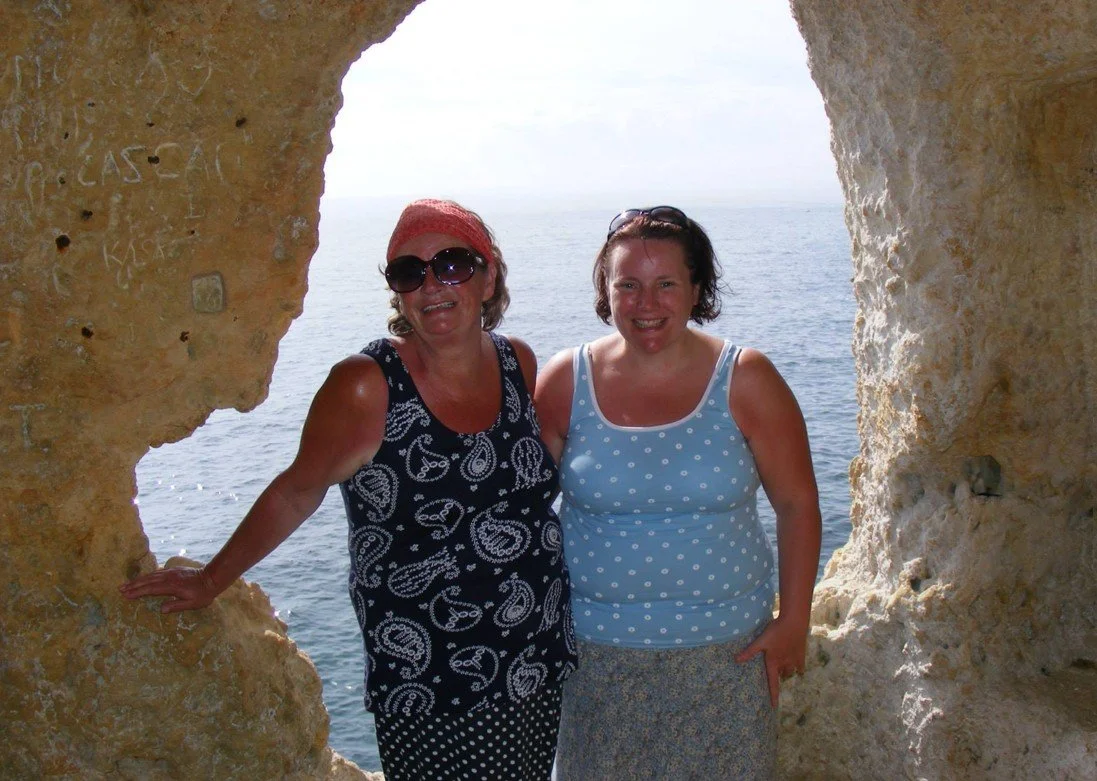
Tracy, founder of Purplelily Design, on her travels around Portugal with her mum.